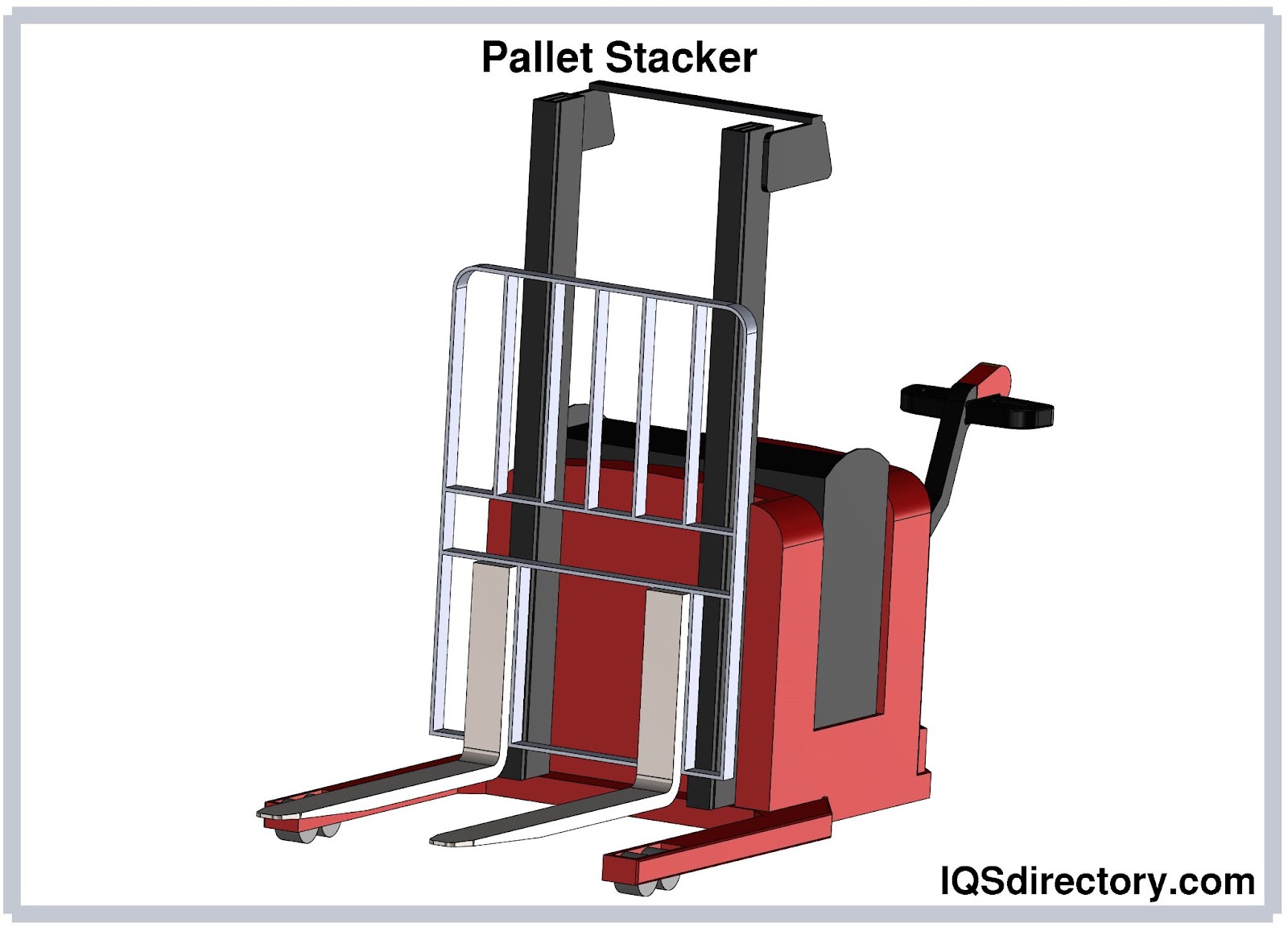
Typically, pallet stackers feature two power-operated prongs (forks). These forks may be raised or lowered for loading and unloading by sliding underneath the pallet and lifting it. The forks on pallet stackers slide underneath the pallet to raise it, and powered models feature an engine that houses any electrical or gas-powered equipment needed to operate the machine. Read More…
We create forklifts that are ideal for rough terrain environments. These powerful machines offer superior lifting strength but they are also very easy to use. Our outstanding products are reinforced with the highest quality resources available. These units come with unmatched quality and the consistency is guaranteed. We will tailor our processes to adhere to your timetables.

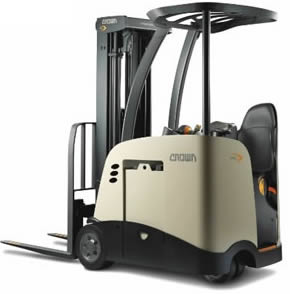
Our goal at Crown Equipment Corporation is to provide you with the very best forklift trucks. These items are extremely reliable and can handle the toughest loads. We are eager to work with your business. We offer competitive pricing for premium quality forklifts.

At Mitsubishi Logisnext Americas, we design and build forklift trucks that help businesses move smarter, safer, and more efficiently. Our portfolio covers electric and internal combustion lift trucks engineered for performance across manufacturing, distribution, and warehousing operations.

Since 1917, CLARK has been one of the forklift industry`s most progressive manufacturers, continuously seeking to improve product, expand service and provide value to its customers. A full line of varying precision manufactured equipment ranging from 1,500 to 18,000 pound capacities serve the needs of industrial clients around the world. Please call CLARK today with any questions you may have.



More Pallet Stackers Manufacturers
Pallet stackers are essential warehouse and material handling equipment designed to efficiently lift, move, and stack palletized loads. They play a crucial role in optimizing warehouse operations, increasing productivity, and improving safety standards for material handling processes. Broadly, pallet stackers can be categorized into two primary groups: powered pallet stackers and manual pallet stackers. These versatile machines are often compared to counterbalanced forklifts, which feature prongs extending from the front and operate without foundation legs or outriggers to support the load.
Counterbalanced forklifts and pallet stackers are both popular choices for material handling, but pallet stackers offer unique advantages, especially in environments where space efficiency and maneuverability are critical. Modern pallet stackers are engineered to lift pallets to considerable heights and handle heavy loads, with some models capable of raising up to five tonnes. It's important to note that the load limit for a forklift's or stacker's forks is integrated into the equipment design and typically decreases as fork elevation increases or when the load is not centered.
Powered pallet stackers greatly reduce the physical strain on workers compared to manual pallet stackers, as their forks are automatically raised and lowered through an electric or hydraulic system. This not only enhances operational speed but also minimizes the risk of workplace injuries. As businesses seek to maximize efficiency and employee well-being, the adoption of powered stackers has become increasingly prevalent in warehouses, distribution centers, manufacturing plants, and retail environments.

Types of Pallet Stackers: Finding the Ideal Equipment for Your Material Handling Needs
Selecting the right pallet stacker depends on your facility's specific requirements, including load capacity, lift height, available aisle space, and operational frequency. Below, we explore the main types of pallet stackers, each designed for distinct material handling challenges and use cases. Are you unsure which pallet stacker is best for your warehouse? Consider the following options and their most common applications:
-
Manual Pallet Stackers:
Manual pallet stackers are the most common entry-level stackers for warehouses and storage facilities. These devices utilize a hydraulic pump mechanism—typically operated by a handle or foot pedal—to raise and lower pallets without the need for electric power. Manual stackers are ideal for low-volume applications, smaller loads (usually up to 2,000 kg), and facilities with limited budgets. Their simple design ensures low maintenance requirements and easy maneuverability, making them a popular choice for small businesses, workshops, and retail backrooms.
Looking for a cost-effective material handling solution? Manual pallet stackers provide reliable performance for operations that do not require frequent or high-volume lifting. Evaluate the maximum lift height, fork width, and turning radius for your intended application to ensure compatibility.

-
Semi-Electric Stackers:
Semi-electric pallet stackers bridge the gap between manual and fully electric models. These hybrid stackers typically feature an electric lifting mechanism (powered by batteries) while retaining manual propulsion for moving the unit. This design makes semi-electric stackers well-suited for facilities that require moderate lifting capacity (often up to 1,500–2,000 kg) and occasional pallet stacking over short distances.
Best for: Warehouses and distribution centers seeking increased lifting efficiency without the full investment in electric drive technology. Semi-electric stackers reduce operator fatigue and improve productivity for repetitive stacking tasks, such as loading and unloading delivery vehicles or organizing inventory in storage areas.

-
Electric Pallet Stackers:
Electric pallet stackers (also known as powered stackers) deliver maximum efficiency, safety, and ease of use. They are powered by high-capacity batteries and electric motors, allowing operators to move, lift, and lower heavy pallets with minimal manual effort. Electric stackers are equipped with advanced controls, ergonomic handles, and safety features such as emergency stop buttons, load backrests, and stability systems.
Why choose an electric pallet stacker? Electric models are ideal for high-throughput warehouses, manufacturing plants, and large distribution centers where speed, precision, and operator comfort are paramount. They excel in applications involving frequent pallet movement, tight aisle spaces, and multi-level racking systems. With lifting capacities ranging from 1,000 kg to over 2,500 kg and lift heights often exceeding 5 meters, electric stackers can drastically improve material handling throughput and reduce labor costs.

Key Construction Features of Pallet Stackers
When evaluating pallet stacker construction, consider the following essential factors to ensure durability, safety, and optimal performance for your warehouse or industrial environment:
- Load Capacity and Lift Height: Identify the maximum weight your stacker needs to handle and the required lift height for your racking system. The maximum number of pallets that can be stacked depends on lift height and stacker stability.
- Fork Width and Length: Adjustable fork widths allow stackers to accommodate various pallet sizes and improve versatility for different material handling applications.
- Chassis and Frame Design: Durable, heavy-duty steel construction resists breakdowns from frequent use and heavy loads. Consider reinforced frames for high-capacity operations.
- Wheel Configuration: Both 4-wheel and 3-wheel counterbalance configurations are available to match your desired maneuverability and load distribution needs.
- Stability Systems: The stacker's center of gravity shifts with each load movement. Modern stackers feature advanced stability mechanisms to prevent tipping and ensure worker safety.
- Ergonomics and Operator Safety: Look for features such as padded handles, intuitive controls, and protective guards to enhance operator comfort and minimize workplace injuries.
- Space Optimization: Pallet stackers are vital for warehouses and distribution centers, especially those with narrow aisles or limited space where forklifts may be impractical.
- Maintenance Access: Easy-to-access maintenance points help reduce downtime and prolong equipment lifespan.
Want to compare construction features between leading pallet stacker brands? Use our supplier directory to review specifications, request detailed product brochures, and consult with technical experts to match equipment with your operation’s unique requirements.
How Pallet Stackers Work: Step-by-Step Operation and Safety Considerations
Understanding the operation of pallet stackers is critical for improving efficiency, reducing operational risks, and ensuring safe workplace practices. Here’s a closer look at how pallet stackers function in daily warehouse use:
- Operators use levers and machine handles to control movement and lifting functions.
- Motorized stackers feature steering wheels, enabling precise maneuvering similar to driving a car, even in narrow aisles.
- Most stackers are equipped with controls for raising and lowering forks, while some also include mast tilt functions to counteract load angles and prevent items from sliding off the forks.
- Tilt capabilities also assist in traversing slightly uneven surfaces, improving load stability during transport.
- Manual stackers use hydraulic jacks for lifting, with the operator pushing or pulling the stacker into position and operating a foot pedal or hand lever to raise or lower the forks.
- Advanced electric stackers incorporate digital displays, programmable lift heights, and safety interlocks as part of their standard features.
- Regular maintenance and operator training are essential for maximizing uptime and minimizing workplace accidents.
-

Searching for pallet stacker safety tips or best practices? Explore our comprehensive guides on safe forklift and stacker operation, routine inspection checklists, and operator certification requirements to maintain compliance and protect your workforce.
Benefits of Pallet Stackers: Enhancing Warehouse Efficiency and Reducing Costs
Investing in the right pallet stacker can deliver significant advantages to your material handling operations. Here are the key benefits that make pallet stackers a smart choice for modern warehouses and logistics facilities:
- Many pallet stackers feature adjustable forks, enabling compatibility with various pallet sizes and eliminating the need for multiple machines.
- Simple controls and intuitive operation reduce the learning curve, allowing new employees to become productive quickly.
- Stackers are designed for speed and versatility, suitable for a wide range of professional environments—from small retail spaces to large industrial warehouses.
- More affordable than full-sized forklifts, pallet stackers offer a cost-effective material handling solution for businesses of all sizes.
- Compact design makes pallet stackers ideal for facilities with limited floor space, where forklifts may not fit or maneuver easily.
- Increased maneuverability allows stackers to operate efficiently in tight spaces and narrow aisles, improving workflow and reducing congestion.
- Pallet stackers require less maintenance than traditional forklifts, leading to lower ownership costs and reduced downtime.
- Stacker trucks are often preferred over forklift trucks in confined warehouse environments due to their agility and ease of use.
Want to see how pallet stackers can reduce labor costs and boost productivity in your operation? Request a demonstration or download our ROI calculator to compare different stacker models and their impact on your facility’s efficiency.
Common Applications and Use Cases for Pallet Stackers
Pallet stackers are indispensable tools in a variety of industries and operational settings. Here are some of the most common applications where stackers deliver significant value:
- Ideal for warehouses, distribution centers, and logistics facilities that handle mid-sized or high-volume goods on a daily basis.
- Perfect for environments where quick and intuitive reconfiguration of storage layouts is necessary, such as seasonal inventory changes or high-turnover goods.
- Suitable for manufacturing plants and factory floors that require frequent movement of raw materials, components, or finished products between workstations.
- Valuable in retail stockrooms, supermarkets, and big-box stores for restocking shelves and organizing bulk product deliveries.
- Used in cold storage and food distribution facilities where maneuverability and compact design are critical.
- Beneficial for operations that require more nimble handling than large forklifts or where non-motorized pallet carts are too slow or labor-intensive.
- Increasingly implemented in e-commerce fulfillment centers and third-party logistics (3PL) providers to expedite order picking and improve throughput.
- Employed in automotive, pharmaceutical, and electronics industries for safe, efficient transfer of sensitive or high-value goods.
Not sure which pallet stacker best fits your industry? Search by application—such as “best stacker for cold storage,” “electric stacker for retail,” or “pallet stacker for tight aisles”—to discover tailored solutions and industry-specific case studies.
How to Choose the Right Pallet Stacker: Key Decision Factors
Selecting the best pallet stacker for your facility involves several critical considerations. To ensure your investment delivers optimal performance and long-term value, evaluate the following factors before making a purchase:
- Load Capacity: Match the stacker’s rated capacity to your heaviest pallet loads to ensure safe operation and compliance with workplace safety standards.
- Lift Height: Assess the height of your racking systems and storage areas to determine the necessary maximum fork elevation.
- Aisle Width and Manoeuvrability: Measure your aisle widths and choose stackers with appropriate turning radii for your spatial constraints.
- Power Source: Decide between manual, semi-electric, or electric models based on your facility’s power availability, workload, and operator preferences.
- Duty Cycle: Consider how frequently the stacker will be used each shift, as high-duty-cycle environments may require more robust or electric-powered equipment.
- Safety Features: Look for advanced safety systems, such as overload protection, emergency brakes, and safety guards, especially for high-traffic or multi-shift operations.
- Maintenance Requirements: Evaluate the stacker’s service intervals and ease of maintenance to minimize downtime and prolong equipment life.
- Budget and Total Cost of Ownership: Factor in initial purchase price, ongoing maintenance, and expected lifespan when comparing stacker models.
Need help comparing pallet stacker models? Use our interactive product comparison tool to filter by specifications, brand, and price to find the best match for your operational needs.
Choosing the Right Pallet Stacker Supplier: A Comprehensive Buyer’s Guide
To achieve the most beneficial outcome when purchasing a pallet stacker, it’s crucial to partner with a reputable and experienced supplier. Our pallet stacker supplier directory makes it easy to compare multiple companies based on their expertise, product range, support services, and customer reviews. Each supplier’s business profile page highlights their core capabilities, product certifications, and application specialties, allowing you to make an informed decision.
How to use our supplier comparison resources:
- Browse our comprehensive directory of pallet stacker suppliers to explore leading brands and manufacturers.
- View each company’s business profile page for details on product offerings, customization options, and service coverage.
- Utilize our proprietary website previewer to quickly assess each supplier’s expertise and industry focus.
- Contact suppliers directly using our integrated RFQ (Request for Quote) form to request pricing, technical support, or a customized solution for your facility.
- Compare quotes, lead times, and after-sales support before making your final decision.
Ready to request pallet stacker quotes? Use our simple RFQ form to contact multiple suppliers simultaneously, streamlining your procurement process and ensuring you receive competitive offers tailored to your requirements.
Frequently Asked Questions About Pallet Stackers
- What is the difference between a pallet stacker and a forklift? Forklifts are typically larger, more powerful, and suitable for outdoor use and heavy-duty loads, while pallet stackers are more compact, affordable, and ideal for indoor material handling in tight spaces.
- How do I determine the right stacker capacity for my warehouse? Calculate the weight of your heaviest palletized load and ensure the stacker’s rated lift capacity exceeds this figure, factoring in the maximum lift height and load center.
- Can pallet stackers be used on ramps or uneven floors? Some models, particularly those with advanced stability features, can negotiate minor inclines or uneven surfaces, but always consult the manufacturer’s recommendations for specific limitations.
- How often should pallet stackers be serviced? Regular preventive maintenance is recommended every 6–12 months, or per the manufacturer’s guidelines, to ensure safe and reliable operation.
- Are electric pallet stackers environmentally friendly? Yes, electric stackers produce zero emissions at the point of use and are increasingly powered by energy-efficient batteries, making them a sustainable choice for green warehouses.
- What training is required for pallet stacker operation? Operators should receive certified training on stacker operation, workplace safety, and emergency procedures. Many suppliers offer onsite or online training programs for your team.
Have more questions about pallet stackers? Explore our in-depth knowledge base or connect with a stacker specialist for personalized guidance.
Get Started: Request a Quote or Consultation Today
Whether you’re upgrading your warehouse equipment, expanding your distribution operations, or seeking to improve workplace safety, our network of pallet stacker suppliers is ready to help. Request a no-obligation quote, schedule a product demonstration, or download our comprehensive pallet stacker buying guide to start your search with confidence.
Want to compare pallet stacker prices, features, and reviews? Visit our product comparison pages or chat live with a material handling expert to get fast, accurate recommendations for your business.

 Cranes
 Electric Hoists
 Forklifts
 Hydraulic Lifts
 Rope
Rope Wire Rope
 AGV
AGV Air Pollution Control
 Assembly Machinery
 Blowers
 Conveyors
 Cranes
 Deburring Machinery
 Dust Collectors
 Heaters
 Hose Reels
 Lubricators
 Mezzanines
 Modular Buildings
 Storage Racks
 Ultrasonic Cleaners
 Work Benches